People’s Tribunal on Taliban Opens in Madrid, Highlighting Gender Apartheid Against Afghan Women

Tawazon – The first session of the People’s Tribunal on the Taliban opened in Madrid, Spain, on Wednesday, October 8, aiming to investigate widespread human rights violations, particularly those committed against Afghan women and girls under Taliban rule.
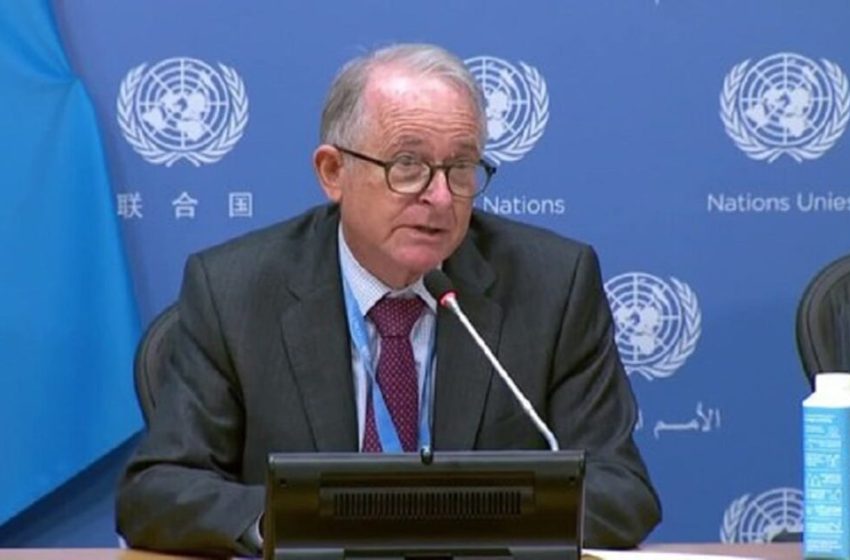
Gianni Tognoni, Deputy Chair of the tribunal, said during the opening ceremony that Afghan women are “victims of the gravest human rights violations.” He added that the tribunal seeks to “decolonize the rights of Afghan women”, rights that have been systematically violated by the Taliban.
Tognoni noted that while the tribunal has previously examined human rights abuses in Afghanistan during the Soviet occupation, the Taliban’s actions now represent an even deeper challenge to international law. He called the implementation of Taliban-imposed laws not only a crime against humanity but also a systematic assault on fundamental rights, carried out through active repression and the denial of collective dignity and freedoms.
According to him, the Taliban’s enforcement of their strict codes constitutes “crimes against humanity” and has created a system of governance built on widespread suppression of basic rights and the denial of dignity and agency to Afghan citizens particularly women.
A representative of the tribunal’s secretariat said that by defining women as the “other” and as “enemies,” the Taliban have silenced them and stripped them of decision-making power, turning them into voiceless victims of institutionalized discrimination.
Tognoni warned that “the situation of Afghan women is not confined to one country.When such extreme levels of violence and repression against women are tolerated, it can become a dangerous precedent globally.”
On the first day of the tribunal, prosecutors including Mohib Mudassir, Azada Razmohammad, Orzala Nemat, and Benafsha Yaqubi, described the Taliban’s policies toward women as a clear form of gender apartheid. They emphasized that these actions are systematic and intentional oppression designed to erase women from public life.
Benafsha Yaqubi stated, “The pain of Afghan women is a moral crisis for the world”. Azada Razmohammad said the Taliban have “deliberately targeted women and girls,” while Mohib Mudassir accused the group of violating numerous international conventions nd eliminating women from all spheres of public participation.
Former Chair of Afghanistan’s Independent Human Rights Commission, Shaharzad Akbar, criticized the global community’s approach to the Taliban, saying, “Countries are helping normalize the Taliban by justifying their policies as cultural norms.” She urged the International Criminal Court (ICC) to investigate the Taliban’s crimes against women, stressing that “no meaningful international action has been taken to hold the Taliban accountable.”
During the hearing, several victims also testified. Parwana Ebrahimkhel, a women’s rights protester and former Taliban detainee, recounted how Taliban forces used live ammunition to disperse demonstrators. She said she was repeatedly tortured in prison andsentenced to stoning. “At that time, I only wished for death,” she said. “I attempted suicide several times but failed. They eventually released me after forcing a confession.”
Another activist, Atefa Hamidi, testified that she was repeatedly detained and threatened by Taliban forces. “I couldn’t sleep at night out of fear of assault and torture,” she said. “They told me a woman’s only role is to stay home and give birth.”
The tribunal will continue over the coming days, with the goal of documenting and pursuing legal accountability for human rights abuses in Afghanisan, particularly those targeting women.
The event in Madrid comes amid ongoing accusations by rights organizations that the Taliban are committing systematic and widespread violations of human rights. Recently, the International Criminal Court in The Hague issued arrest warrants for several Taliban leaders, including the group’s supreme leader.