Bennett Urges Recognition of Gender Apartheid in Afghanistan as an International Crime
Tawazon – The Office of the United Nations High Commissioner for Human Rights (OHCHR) in Geneva has announced that the UN Human Rights Council has decided to establish an independent investigative mechanism for Afghanistan. The decision also includes the extension of the mandate of the UN Special Rapporteur on the situation of human rights in Afghanistan.
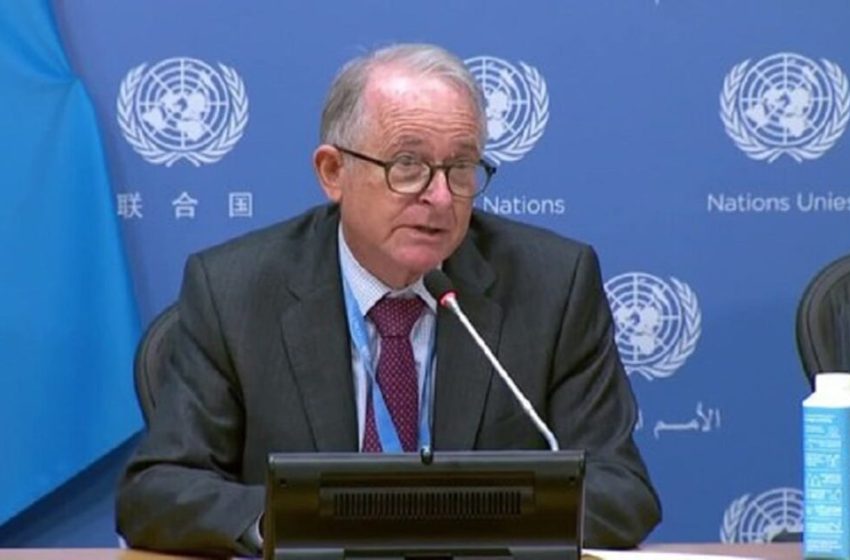
Richard Bennett, the UN Special Rapporteur on the situation of human rights in Afghanistan, welcomed the decision, calling it “a significant and historic milestone in the pursuit of truth, justice, and accountability” for international crimes and widespread human rights violations in Afghanistan.
“The establishment of this mechanism marks a strong sign of the international community’s determination to stand with the people of Afghanistan,” Bennett stated.
“By collecting, consolidating, preserving, and analysing evidence of serious crimes and violations, and preparing case files to facilitate future criminal proceedings, the Human Rights Council has taken a decisive step to ensure that those responsible for serious international crimes will be held to account.”
Bennett said that this decision stands as a testament to the courage and perseverance of Afghan victims, survivors, and civil society, whose tireless advocacy has made this moment possible. “Today, the Council has heard their voices and reaffirmed that justice for the people of Afghanistan remains a global imperative”.
He emphasized that the new mechanism should work in coordination with the International Criminal Court (ICC) and complement its ongoing efforts.
He urged UN member states to support the ICC’s investigation on Afghanistan and back efforts to hold the current Afghan authorities accountable for their obligations toward women and the elimination of gender-based discrimination.
Acknowledging the renewal of his mandate, the Special Rapporteur said: “I look forward to continuing to fulfill the responsibilities of my mandate including by monitoring and reporting on the human rights situation in Afghanistan and working with all stakeholders to find ways to improve it.”
Bennett also called on governments to use universal jurisdiction laws to prosecute individuals responsible for serious human rights violations in Afghanistan, regardless of where they are located. He stressed that the systematic and institutionalized discrimination against women, described as “gender apartheid”, should be recognized as an international crime.
However, Bennett warned that the establishment of a new investigative body alone cannot solve Afghanistan’s multidimensional crisis. “While significant, an investigative mechanism alone cannot address the full scope of the crisis in Afghanistan. This is whywe need an ‘all tools’ approach, one which combines criminal justice initiatives with broader efforts to restore the rights of women and girls, increase humanitarian assistance, and support Afghan-civil society, especially women human rights defenders,” he stated.
He emphasized that the meaningful participation of Afghans, particularly women and youth, must be ensured in all discussions and decisions concerning the country’s future.
Bennett serves as the UN Special Rapporteur on the situation of human rights in Afghanistan. Special Rapporteurs and Independent Experts of the Human Rights Council are independent individuals appointed by the Council under its Special Procedures. They serve in their personal capacity, are not UN staff, and do not receive a salary. Their views and statements are independent and do not necessarily reflect those of the UN or the Office of the High Commissioner for Human Rights (OHCHR).