Australian Liberal Candidate’s Inquiry Submission Says Hazara Not Persecuted For Ethnicity
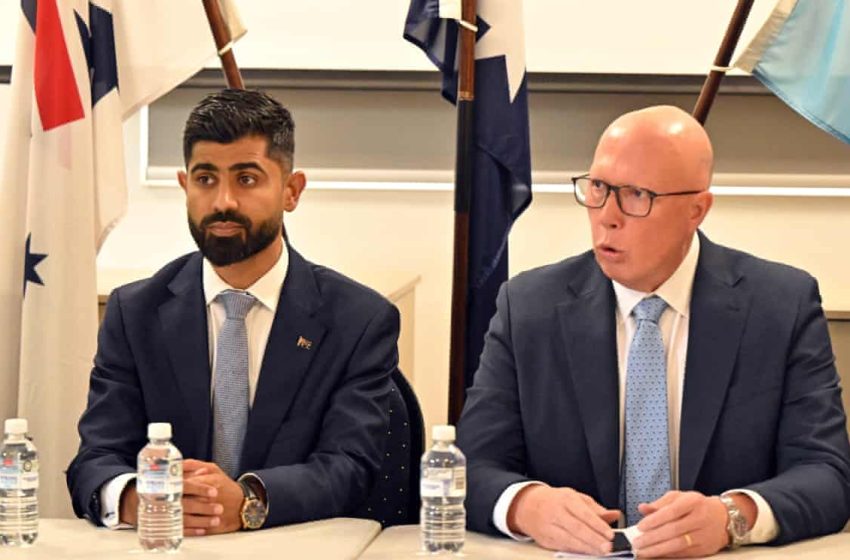
A parliamentary submission co-authored by Zahid Safi, the Liberal candidate for the federal seat of Bruce, stated that Afghanistan’s Hazara community was not persecuted on the basis of ethnicity, The Guardian has reported.
The submission, made to a 2021 Senate inquiry into Australia’s involvement in the Afghanistan war, claimed that victims of war in Afghanistan were targeted for ideological rather than ethnic reasons. It also cited a 2005 Human Rights Watch (HRW) report to assert that Hazara “warlords” committed atrocities in the 1990s, including the mutilation of women and observing live childbirths.
Safi, when contacted by The Guardian Australia, did not directly address the claims. He said he is a “staunch advocate for freedom of religion or belief for all individuals worldwide” and added, “As someone who fled the country because of war, I know everyone under the Taliban suffered, and my advocacy for human rights is shaped by those experiences.”
The joint Senate submission stated that “the victims of war are not based on ethnicity,” and that opposition to the Taliban’s ideology was the primary reason individuals were targeted during the conflict.
According to The Guardian, the submission drew pushback from some members of the Hazara community, which has a significant presence in Melbourne’s southeastern suburbs. A dissenting submission said the claims relied on “racist tropes” and failed to acknowledge the well-documented persecution of the Hazara ethnic group.
A 2022 briefing paper by the Australian Department of Foreign Affairs and Trade (DFAT), also cited by The Guardian, stated that Hazaras—who make up an estimated 10–20% of Afghanistan’s population—face a “high risk of harassment and violence on the basis of their ethnicity and sectarian affiliation.” The paper noted that in August 1998, at least 2,000 Hazaras were killed in Mazar-i-Sharif by Taliban forces, describing the event as the worst massacre in Afghanistan’s recent history.
The submission co-authored by Safi also argued that other Afghan ethnic groups had been overlooked in Australian policy and discourse. “Pashtuns have had the most casualties compared to others and this needs to be acknowledged by the Australian government,” it said, claiming the two-decade war occurred “mostly in the Pashtun provinces.”
Thousands of Hazaras fled to Australia in the 1990s following the rise of the Taliban regime, with many settling in the Bruce electorate, which is also home to other Afghan communities. Bruce is currently held by Labor MP Julian Hill.
Human Rights Watch’s Afghanistan researcher, Fereshta Abbasi, who is ethnically Hazara, said the authors had misrepresented HRW’s findings to imply that brutal violence in Kabul between 1992 and 1995 was committed exclusively by Hazara forces. “Among these atrocities were those carried out by ethnically Pashtun militia forces and ethnically Hazara militia forces against civilians of these respective ethnic groups, in tit-for-tat kidnappings, rapes and killings,” Abbasi told The Guardian.