Pakistan’s Consecutive Strikes on Afghanistan; From “Strategic Depth” to Direct Threats
Tawazon – National sovereignty is one of the fundamental principles of international law, emphasizing political independence, territorial integrity, and the equality of states. According to the United Nations Charter no country has the right to interfere in the internal or external affairs of another state.
Since the formation of the modern Afghan state in the 19th century, Afghanistan has repeatedly witnessed violations of this principle. However, after the establishment of Pakistan in 1947, tensions along the disputed Durand Line, Islamabad’s political and security interference, and the presence of proxy groups have placed Afghanistan’s sovereignty and territorial integrity under constant threat.
This analysis examines the legal, political, and security dimensions of Pakistan’s violations of Afghanistan’s sovereignty and explores the consequences of these violations for national stability and development.
Understanding National Sovereignty and Its Violations
National sovereignty refers to a state’s authority to exercise power within its territory without external interference. It has two key dimensions:
a. Internal sovereignty: control over borders, institutions, and political decisions.
b. External sovereignty: independence in international relations and prevention of foreign influence.
Violations of sovereignty typically occur in the following forms: military invasion or the presence of foreign troops, use of proxy groups inside another country, direct or indirect political interference, cross-border violations, rocket and air attacks, economic or political pressure to influence decisions. All of these forms have appeared in different degrees throughout the history of Afghanistan and Pakistan relations.
Historical Roots of the Afghanistan and Pakistan’ Relations
The core dispute between the two countries is rooted in the Durand Agreement, signed in 1893 between Amir Abdul Rahman Khan and Britain. After gaining independence in 1919, Afghanistan questioned the validity of this agreement, calling it coercive deal, and refused to recognize th Durand Line as the official border. Since then, this disagreement has been a persistent source of political and security tensions.
In the 1980s, Pakistan’s military and its intelligence agency (ISI), with the U.S. support, equipped Afghan Mujahidin to fight Soviet forces. After the 1990s, this policy evolved into active support for the Taliban, leading to Pakistan’s structural influence in Afghanistan’s power dynamic.
From a strategic perspective, Islamabad has viewed Afghanistan as its strategic depth in any political conflict with India. This has driven Pakistan to prefer a dependent and aligned regime in Kabul over an independent Afghan state.
Violation of Afghanistan’s Sovereignty by Pakistan
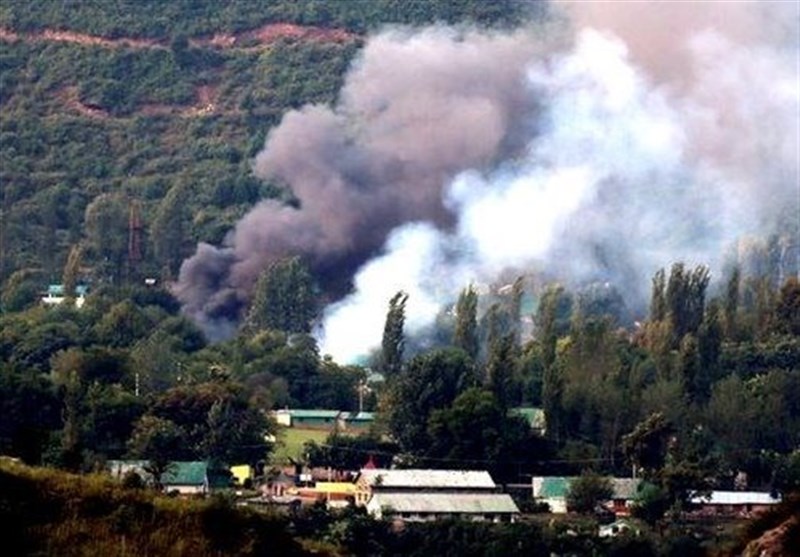
- Border Violations and Breach of Territorial Integrity: Over the past two decades, Pakistan has repeatedly violated Afghanistan’s territorial sovereignty, particularly along the provinces of Kunar, Nangarhar, Paktia, and Khost, through attacks and airstrikes. Recently, even Kabul, the heart of Afghanistan, has witnessed such cross-border assaults.
- Support of Insurgent Groups: Pakistan has been accused of supporting insurgent groups either directly or through networks such as the Haqqani Network, the Quetta Shura, the Peshawar Shura, the Miranshah Shura, the Waziristan Shura, the Karachi Shura, and the Council of Ulema, collectively known as the Taliban Leadership Council, which forms the core command structure of the Afghan Taliban. This support includes safe havens, weapons, training, and logistical facilitation. A 2021 report by the United Nations Security Council confirmed that parts of the Taliban used Pakistani territory to organize and equip their forces.
- Political Influence and Diplomatic Pressure: During the republic era (2001-2021), Islamabad actively sought to manipulate the peace process in its favor by pressuring the Afghan government to engage with the Taliban under conditions advantageous to Pakistan. It repeatedly used tools such as controlling trade routes and restricting transport as economic leverage against Kabul.
- Water and Migration Policies: Pakistan has also undermined Afghanistan’s sovereignty by controlling shared water flows, especially the Kunar River, and through migration policies, including the forced return or restriction of Afghan refugees. These measures have exacerbated the country’s economic vulnerabilities and humanitarian challenges.
Clear Violation of Afghanistan’s Territorial Integrity: Who Is Responsible?
As highlighted in the introduction, the territorial integrity of any nation is a fundamental pillar of its sovereignty and international recognition. When this integrity is violated, it is not only geographical borders that are breached, but also national dignity, political authority, and public confidence in governing institutions. In recent years, Afghanistan has repeatedly witnessed blatant violations of its territorial integrity, sometimes by neighboring countries using security or political justifications to enter Afghan territory, and sometimes as a result of internal weakness that has prevented a strong defense of national borders. This raises a critical question: Who is truly responsible? The answer can be examined on three levels; domestic, regional, and international.
A) Domestic Level: Lack of coordination among governing institutions, weak foreign policy, the absence of a unified national defense force, and political rifts between ruling factions have all contributed to Afghanistan’s vulnerability. Any government lacking internal legitimacy will naturally be weaker in the face of external threats.
B) Regional Level: Some neighboring countries have exploited Afghanistan’s power vacuum to expand their influence and use Afghan instability as a strategic tool to advance their geopolitical interests.
C) International Level: The silence or at times indifference of the international community regarding violations of Afghanistan’s borders has served as an indirect incentive for aggressors. When breaches of a nation’s territorial integrity face no diplomatic consequences or political pressure, such actions gradually become normalized.
The question that now arises is whether the current rulers in Afghanistan are truly capable of defending the country’s territorial integrity.
When a nation is trapped in continuous political, economic, and security crises, the first question raised by public opinion is this: Is the root cause a weak governing system or political subservience disguised as governance? At first glance, these two concepts may seem similar, but in reality they differ fundamentally. Weak governance refers to the inability to make independent decisions, manage crises, ensure justice, and maintain national authority. Such weakness may stem from lack of experience, internal divisions, or external pressure. Political subservience, however, goes far beyond weakness. It is a state in which the national will is deliberately sold in favor of foreign interests. In such a system, major national decisions are not made based on the interests of the people, but according to the demands and directives of external powers.
In conclusion, weak governance can be corrected through reform, national unity, and public awareness. But political subservience is a slow death of independence. A nation whose leaders are internally dependent, even if they hold power, remains in reality obedient to foreign directives. So the question is: Do Afghanistan’s current rulers suffer from weak governance, or are they following a rootless political agenda?
Consecutive Pakistani Attacks on Afghanistan: A Silence That Raises Serious Questions
In relations between states, borders are not merely geographic lines, they represent sovereignty, authority, and national independence. Any violation of these borders is a clear assault on a nation’s territorial integrity and dignity. Beyond its military dimension, such aggression is also a political insult and a blow to the collective national pride of Afghans. Yet in recent years, Pakistan has repeatedly violated Afghanistan’s sovereignty, launching successive attacks by air and land strikes that have claimed the lives of defenseless civilians along the disputed border areas.
This raises a crucial question: Why does Islamabad continue this policy, and why have the Taliban remained silent in the face of such aggression? For decades, Pakistan has viewed Afghanistan as part of its so-called “strategic depth” policy. The country’s military and intelligence establishment has consistently sought to maintain long-term influence over Afghanistan’s political and security structure. The recent attacks can be seen as a continuation of this long-standing strategy, a tool of pressure and a reminder of Pakistan’s leverage.
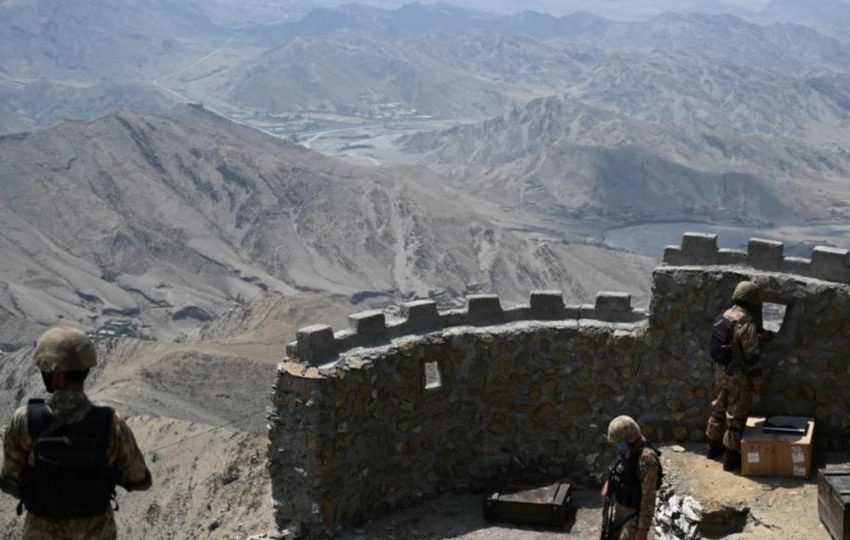
Islamabad frequently uses the presence of militant groups along the Durand Line, especially Tehrik-i-Taliban Pakistan (TTP), as justification for its strikes inside Afghan territory. However, many analysts argue that Pakistan’s objectives go far beyond security concerns. The primary goal, they say, is to pressure the Taliban—its former proxies—into submission and ensure they comply with Pakistan’s political and intelligence demands.
Pakistan’s Cross-Border Attacks Surge After Taliban Takeover; From Pressure Strategy to Test of Influence
Pakistan’s cross-border strikes inside Afghanistan are not a new phenomenon. The history of relations between the two neighbors has been marked by border tensions, sporadic shelling, and military clashes along the Durand Line. However, what has unfolded since the Taliban’s return to power in Kabul is unprecedented in terms of frequency, scale, and intensity. The key question is: Why have Pakistan’s attacks increased since the Taliban takeover?
1. Shift in Power Balance and Crisis of Legitimacy
Following the collapse of the former Afghan republic, the country was left without a recognized political structure capable of defending its borders. The Taliban government, still unrecognized by the international community, lacks the diplomatic and legal standing to respond effectively to foreign military invasions. Pakistan has clearly understood and exploited this vacuum. Islamabad sees the current situation as an opportunity to consolidate its strategic leverage. Pakistani authorities are aware that the Taliban are not in a position to launch a decisive military or political response. Still seeking international legitimacy and relief from economic isolation, the Taliban leadership needs friendly relations with neighboring states.
2. Conflicting Interests Over Tehrik-i-Taliban Pakistan (TTP)
Another major factor behind the rise in cross-border attacks is the presence of Tehrik-i-Taliban Pakistan (TTP) inside Afghanistan.Islamabad claims that since the Taliban returned to power, TTP fighters have found safe havens along the border regions and are using Afghan soil to launch attacks against Pakistan. Pakistan expected the Afghan Taliban, longtime ideological allies, to restrain or hand over TTP members. However, Pakistani officials allege that not only have the Taliban failed to take meaningful action, but in some cases, they maintain informal and complex ties with the group. As a result, Pakistan has turned to military pressure in an attempt to force cooperation from the Taliban.
3. Structural Dependency of the Taliban on Pakistan
Although the Taliban now publicly claim political independence, the reality is more complicated. A significant part of the Taliban’s leadership and military structure was nurtured in Pakistan, benefiting for years from Islamabad’s financial, logistical, and intelligence support. These structural ties have not been completely severed. Fully aware of this dependency, Pakistan uses both military strikes and political pressure as tools of influence. The escalation of border attacks serves as a calculated show of power, a warning from Islamabad to Kabul that the true power still lies in Pakistan, not in Afghanistan.
4. Weak Governance and Lack of a National Strategy
Over the past four years, the Taliban have demonstrated that their foreign policy lacks coherence and national interest based strategy. Decision making has been reactive and ideological, with a narrow focus on internal control rather than regional diplomacy. As a result, border security has fallen far down the list of priorities. Pakistan has taken full advantage of this weakness. A government preoccupied with consolidating power at home is less able to mount a strong response to external threats. Finally, this raises a fundamental question: Is Afghanistan’s independence merely a slogan, or can it be defended in practice? More importantly, are the Taliban truly capable of protecting Afghanistan’s territorial integrity, the core symbol of national sovereignty?
Military Power Alone Cannot Defend a Nation
Defending territorial integrity is not defined solely on the battlefield. In today’s world, words and diplomacy often shape the fate of nations more decisively than weapons. Modern borders are drawn less by artillery and more at negotiation tables. But this raises a fundamental question:Do the Taliban understand the language of diplomacy? The Taliban are a movement born in war, not in political dialogue. They were formed to serve the interests of others. Therefore, when confronted with challenges such as Pakistan’s cross-border aggression, they lack both a logic of negotiation and the skills to manage international crises. In a world where power is exercised through diplomacy, the Taliban still operate with a mentality shaped by violence and extremism. As a result, they either remain silent or issue emotional and ineffective reactions.
Furthermore, a movement that rose to power through war and foreign backing finds it difficult to criticize the very forces that enabled it. That is why, in response to Pakistan’s aggression,the Taliban avoid diplomatic pressure and international advocacy, preferring silence to safeguard their ties with Islamabad. Yet this silence has at a heavy price; every act of inaction only invites further violations. Ultimately, one must ask: Is military power without diplomacy anything more than a double-edged sword, one that wounds its own wielder before reaching the enemy?
Consequences of Pakistan’s Attacks on Afghanistan, A Wound on the Border, a Blow to the Nation
Pakistan’s repeated attacks on Afghan soil are not just military incidents; they reflect a deeper shift in regional power dynamics, a weakening of national sovereignty, and a direct threat to Afghanistan’s independence. Although Islamabad justifies its actions under the pretext of countering insurgent groups or controlling the disputed border, the consequences run far deeper, undermining Afghanistan’s political structure, security environment, and even the psychological resilience of its people.
The first impact of these invasions is the weakening of central authority. When a state fails to defend it borders, it sends a clear message to its citizens and the world: the government is incapable of safeguarding national security. This decline public trust and undermines the political legitimacy of the ruling authorities.For the Taliban, whose domestic legitimacy is already fragile, these attacks represent a serious political and reputational setback. The violence threatens not only Afghanistan’s stability but also the wider region, as every border clash increases the risk of foreign intervention. In reality, Pakistan’s actions only add fuel to the fire of regional instability. And so the critical question emerges: Who continues to deepen the wounds of this exhausted nation?
Consequences of Pakistan’s Violation of Afghanistan’s Sovereignty
Erosion of political independence: Historically, Afghanistan has often been unable to make security decisions without considering Pakistan’s pressure.
Rising domestic instability: Islamabad’s interference has intensified ethnic tensions, political rivalries, and public distrust toward the ruling authorities.
Disruption of peace efforts: Peace negotiations in Afghanistan have consistently been influenced by Pakistan’s strategic interests.
Threats to territorial integrity: Continued cross-border aggression and demographic manipulation in border regions pose a long-term risk to Afghanistan’s unity.
Economic and security dependence: Pakistan’s pressure through trade restrictions and border closures has prevented Afghanistan from managing its transit routes independently.
Conclusion
This analysis shows that Pakistan’s violation of Afghanistan’s sovereignty is not a temporary policy, but a long-term, structural strategy. It is rooted in regional rivalries, unresolved border disputes, and Islamabad’s interventionist security policies. Since its establishment in 1947, Pakistan has relied on various tools, supporting proxy groups, cross-border aggression, political coercion, and economic pressure, to keep Afghanistan within its strategic orbit and prevent the emergence of a strong and independent government in Kabul.
On the other side, fragile state institutions, lack of national consensus, political dependency, and the absence of a coherent foreign policy, have paved the way for this continued interference. Following the Taliban’s return to power, the crisis has deepened.The regime’s lack of international recognition and diplomatic isolation has left Pakistan’s aggressions unanswered at legal and international levels, reducing Afghanistan’s sovereignty to a hollow slogan.