Norwegian Refugee Council Halts Operations in Afghanistan Amid U.S. Funding Cuts
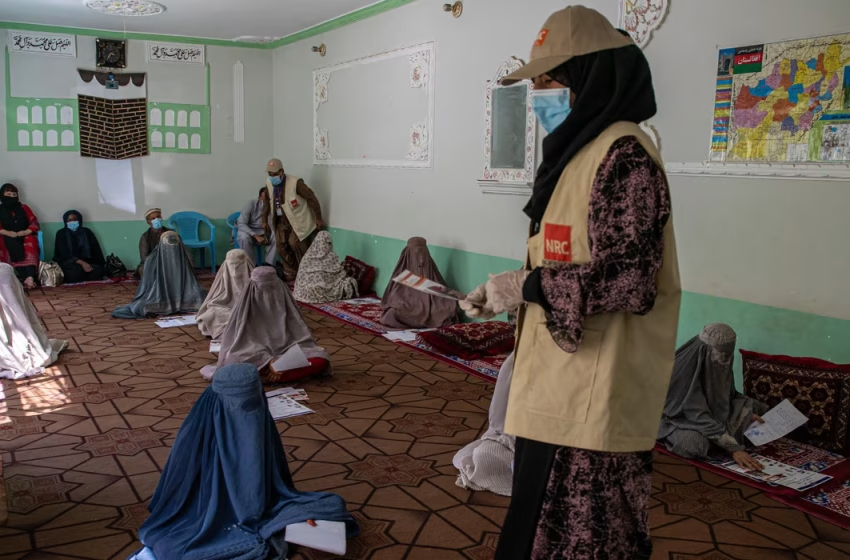
Tawazun – The Norwegian Refugee Council (NRC) has suspended its humanitarian operations in Afghanistan and nearly 20 other countries due to the cessation of U.S. financial aid. The move is expected to have devastating consequences for millions of people who rely on the organization’s support.
According to NRC, the U.S. government had been a significant donor, providing $150 million last year, which made up 20% of the organization’s total budget. However, with these funds now unavailable, NRC has no choice but to scale down or completely halt its activities in multiple countries, including Afghanistan.
The suspension has already led to layoffs of staff in Afghanistan, many of whom were crucial in delivering aid to women, girls, and families struggling. The organization’s withdrawal will further worsen the humanitarian crisis, as half of Afghanistan’s population is already in urgent need of assistance, according to international aid agencies.
Despite the U.S. government announcing a temporary waiver for certain humanitarian programs, NRC has stated that it has not been able to benefit from this exemption. The organization is urging US to release payments for completed projects and clarify future funding plans to prevent more disruptions to life-saving aid efforts.
This crisis is not limited to Afghanistan alone. In Ukraine, the NRC had to halt the planned distribution of emergency aid to 57,000 people living near the war front. The sudden halt in funding is affecting humanitarian missions across the world, leaving vulnerable communities without essential support.
Previously, the Taliban’s Ministry of Economy had also reported that over 50 aid organizations have shut down in Afghanistan due to financial constraints, further deepening the suffering of the Afghan people.
NRC’s suspension highlights the increasing challenges faced by humanitarian organizations, especially those heavily dependent on international donors. With no immediate solution in sight, millions in Afghanistan and beyond now face an even more uncertain future.