Water Crisis in Afghanistan: OCHA Reports 39% of Households Facing Water Shortages
Tawazun – The United Nations Office for the Coordination of Humanitarian Affairs (OCHA) has reported a decline in groundwater levels in Afghanistan, with 39% of Afghan households facing water shortages. OCHA released a report titled “Afghanistan Humanitarian Needs and Response” on Friday afternoon, January 31, expressing concerns about the decline in groundwater levels in the country.
OCHA has identified the adverse effects of climate change, natural disasters, excessive annual extraction of groundwater, and the lack of adequate management to replenish extracted water as the causes of water shortages.
The United Nations Office for the Coordination of Humanitarian Affairs has cited climate change and natural disasters as factors that have increased humanitarian needs in Afghanistan. OCHA stated, “Seasonal and climatic changes, as well as natural disasters, have further increased humanitarian needs across Afghanistan. Concerns about reduced rainfall due to rising temperatures at the beginning of 2025 exist, and the coming year may lead to droughts in agricultural areas, particularly in the northern and northeastern regions.”
The agency has warned that seasonal challenges such as floods may increase due to the La Niña climate phenomenon throughout 2025, causing destruction to residential homes and agricultural lands, displacing many people and families, and creating obstacles in accessing essential services.
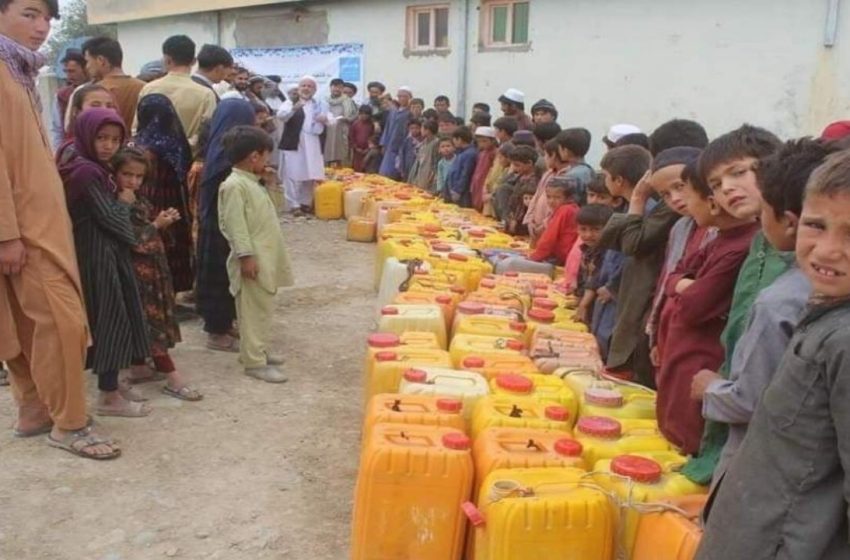
The United Nations Office for the Coordination of Humanitarian Affairs has requested $264 million in donations to address these challenges. The report states, “In Afghanistan, 39% of households face water shortages, and 23% use unclean water. We and our partners need $264 million to prioritize water, sanitation, and hygiene in 2025, but so far, we have received $8.4 million.”
OCHA has also linked food and water shortages to increased malnutrition rates among mothers and children, stating that the number of districts with high malnutrition rates has risen from 19 in 2024 to 56 in 2025. According to OCHA, 3.5 million young children and 1.1 million mothers in these districts suffer from malnutrition and require treatment.
Afghanistan is among the countries most adversely affected by climate change in the world. The country lacks the necessary resources and human capacity to address these changes and has not implemented the necessary measures to mitigate their impact.