Drug Trade in Afghanistan; “Children are the cheapest and easiest human resources”
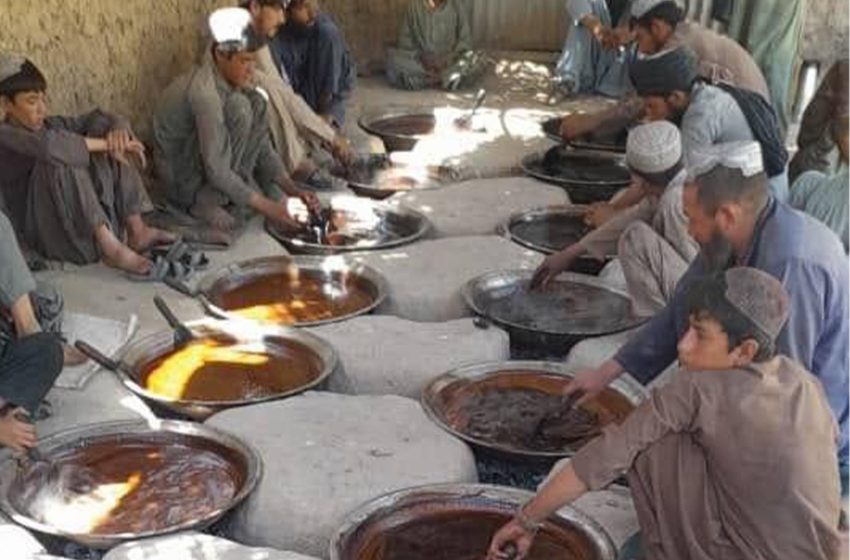
Tawazon- What will be the future of those children who, instead of learning to read and write in the early stages of life, work in drug processing factories?
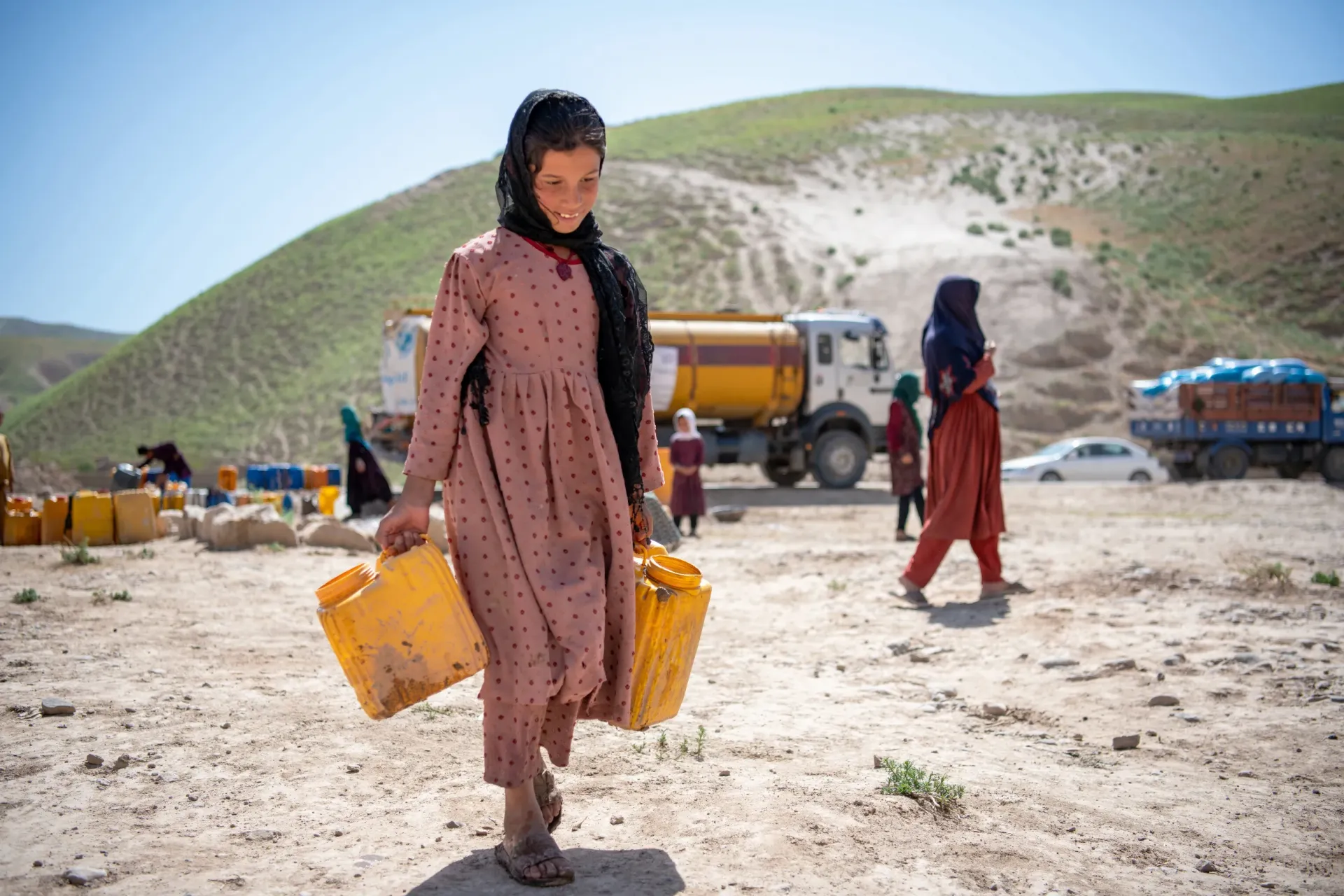
According to domestic and international media reports, a large number of Afghan children are currently working in drug processing factories in the southern and southwestern provinces of Afghanistan.
Kandahar, Helmand, Farah, and Nimroz are provinces where hundreds of children work in drug processing factories alongside their family members.
International child support organizations have always expressed concern about the future of children who work in drug production and processing factories or are used in the drug trade.
Although local drug traffickers do not want to reveal the identity of the children working with them in the production, processing, or trafficking of drugs, Tawazon journalists have spoken to several of these children and their family members in Helmand and Farah provinces and obtained details about their work in drug factories on the condition that their identities remain anonymous.
Family members of children working in drug production and processing factories say they have allowed their children to work in these factories due to economic difficulties.
Mohammad Rafiq (a pseudonym), a resident of Kajaki district in Helmand, says that most of the drug traffickers and businessmen in the southern provinces of Afghanistan are high-ranking Taliban officials and authorities, and they have forced children to work in some drug processing factories. According to him, drug traffickers prioritize children because they can make them work more for less financial compensation compared to adults.
He adds: “My two sons, one 13 years old and the other 16 years old, work in an opium processing factory in this district. There are about twenty other children in this factory. They all process liquid opium with fire, which is then turned into heroin and crystal.”
According to Mohammad Rafiq, he used to grow poppies on his land, and his sons worked with him in the poppy fields, but due to droughts, their land is now barren, and his sons work in drug processing factories.
Farhad (a pseudonym), a 13-year-old boy from Deh Baba village in Kajaki district, who works in a drug processing factory ten kilometers from his village, says there is no school in his village, and he is paid 50,000 Pakistani rupees per month for his work.
This child, who works four hours a day in a drug processing factory, says: “I am not alone; my older brother and other children from the village also work with me in this factory. When opium is brought to the factory, we cook it over a fire from morning till evening to make heroin.”
The children working in drug processing factories do not have any safety equipment and are at high risk of becoming addicted to drugs, as they work in these factories for four to six hours every day.
It is not just the children of Kajaki district in Helmand; dozens of children in Nimroz and Farah provinces also work in similar drug processing factories.
A resident of Chahar Burjak district in Nimroz, who did not want to be named in this report, says that the children in his village have gained good experience in drug processing and some of them have become addicted to these substances.
He says: “Even before the fall of the republican regime, there were dozens of drug processing factories in Chahar Burjak district. In each factory, ten to fifteen children work. Most of these children have also become addicted to drugs. Many children are the breadwinners of their families, and once they get a job in a drug processing factory, they do not easily leave it.”
On the other hand, the United Nations Office on Drugs and Crime (UNODC) reported in November 2024 that the production of opium in Afghanistan remained low for the second consecutive year compared to 2022.
According to the new estimates of this organization, the production of opium in Afghanistan reached 433 tons in 2024, indicating a 30% increase in opium production compared to 2023.
According to the organization, opium production has decreased by 93% compared to 2022, after the Taliban authorities imposed a ban on drug cultivation. However, in 2024, the area under poppy cultivation increased by 19% compared to 2023, with poppies being cultivated on 12,800 hectares of land.
In response to the UNODC report on the increase in poppy cultivation in Afghanistan, Taliban’s Ministry of Interior stated that the findings are “far from reality.”
The ministry’s spokesperson, Abdul Matin Qani, claimed in a video message sent to the media on November 6 that, according to the instructions of Taliban leader Hibatullah Akhundzada, a complete ban on the cultivation and production of drugs has been imposed across Afghanistan.
The UNODC report also mentioned the price of opium in Afghanistan, stating that in the first half of 2024, the price of one kilogram of opium was around $730, which is considered a stable rate. However, in 2022, the price of one kilogram of opium was around $100. The report emphasized the need for international efforts to coordinate the reduction of drug cultivation and production in Afghanistan and suggested supporting Afghan farmers in alternative cultivation.
In addition to Helmand, Kandahar, and Uruzgan provinces, Nimroz is also a province with a long and open border with Iran. According to information received by Tawazon, the liquid extract and opium from poppies in other provinces of Afghanistan are brought to this province, and a large part of it is processed in areas near the border with Iran. The resulting heroin, morphine, cocaine, and crystal are then smuggled into Iran.
Families of some children working in drug processing factories have no plans for their children’s future, and these young children are unaware that their work in these factories will not only endanger their own future but also the lives of many others in Afghanistan and around the world.
Information obtained by Tawazon through interviews with children and their families shows that some children working in drug processing factories have been kidnapped by traffickers because their families owe debts to drug traffickers, and the children work in exchange for these debts.
Although there are no exact figures on how many children work in drug processing factories in the southern and southwestern provinces of Afghanistan, child and human rights activists have serious concerns about children working in drug processing factories and the use of children in drug trafficking.
Human and children’s rights activist Nargis Hassanzai says: “It is a heartbreaking problem that children are deprived of education and work in drug fields or production factories. The world and human rights organizations must speak out to prevent this, or a new disaster will emerge in Afghanistan.”
At the same time, several doctors are also concerned about the deep negative impacts on the health of children working in drug factories, stating that these children will eventually become addicted to drugs or contract diseases such as HIV/AIDS, tuberculosis, or respiratory illnesses.
A doctor in the internal medicine department says: “For years, Afghanistan has been considered the world’s largest producer of drugs. Although Taliban leader Hibatullah Akhundzada imposed ban on the cultivation, production, and trafficking of drugs in April 2022, reports indicate that Afghanistan still holds its place globally in this regard.”
This comes at a time when Abdul Salam Hanafi, the Deputy Administrative Head of the Taliban’s Prime Minister’s Office, has repeatedly said that nearly five million people in Afghanistan, one million of whom are women and children, are currently addicted to drugs. On the other hand, the Taliban’s Ministry of Public Health says that 110 rehabilitation centers are now active in various provinces of Afghanistan to treat drug addicts, including thousands of children and women.