
Women in Nawur Triple Family Incomes Through Dairy Farming
Tawazon – Women in Nawur district of Ghazni province have tripled their family incomes through improved dairy farming practices, according to a new report by the UN Special Trust Fund for Afghanistan (STFA).
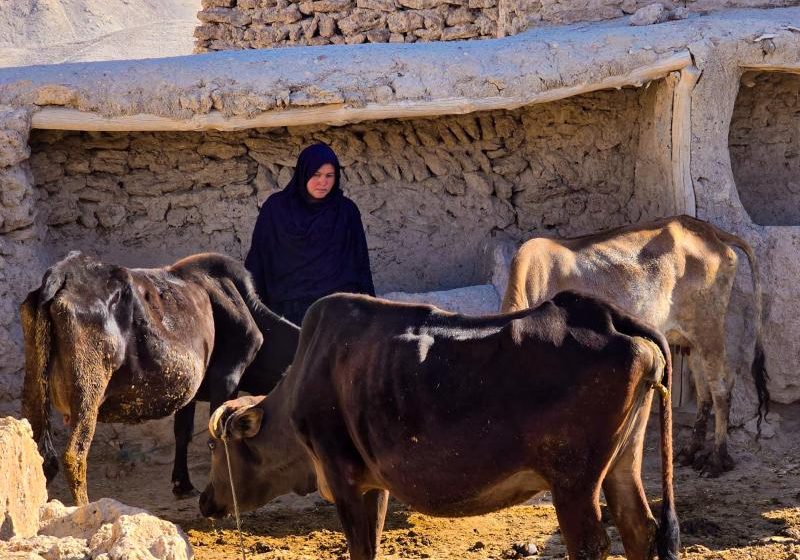
The report noted that dairy farming has traditionally served as a key source of income in Nawur, Ghazni province. Women are responsible for all production activities, while men typically manage the marketing.
However, the report added that challenges such as unpredictable weather, dated farming practices, and limited access to markets have kept incomes low and food insecurity high.Many farmers face difficulties related to hygiene, limited technical knowledge, and a lack of necessary resources. With few opportunities to sell beyond their local areas, they often market small quantities of lower-quality products at low prices, restricting their financial advancement.
Through a project jointly supported by STFA and the Afghan National Reconstruction Coordination (ANCC), women farmers received complete dairy kits, including milk containers, filters, and hygiene tools, along with training on modern production and marketing methods.
Recognizing the limitations of supporting individual farmers in isolation, the project established common interest groups in each village. Each group brought together 20 women farmers to facilitate collaboration, knowledge exchange, and joint production and marketing efforts. This collective approach enabled them to access provincial markets, where they were able to secure better prices and expand their income-generating potential.
As a result, the price of seven kilograms of dairy cream rose from 250 to 750 afghanis, and each household now produces about 120 kilograms of quailty dairy products per month, improving both income and food security.
“The difference is remarkable,” said Zahra, a local farmer in Nawur. “Not only has our income increased, but we also feel more confident in the quality of our products and our ability to compete in larger markets.”
The initiative has not only strengthened women’s economic roles but also revitalized the rural dairy value chain in Ghazni, offering a model for community led recovery amid Afghanistan ongoing economic challenges.