

World Press Freedom Day: 48% of Media Outlets Shut Down in Afghanistan
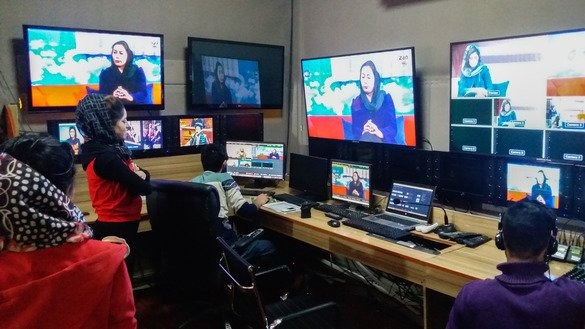
Tawazon – As World Press Freedom Day is marked on May 3, many media outlets in Afghanistan have shut down due to financial and economic challenges.
Since the Taliban returned to power, a large number of television, radio, print and online outlets have closed. Before that many media organizations relied on advertising and project based funding to cover their costs.
According to the National Union of Journalists of Afghanistan, before August 15, 2021, there were 150 TV stations, 305 radio stations, 90 print outlets and 36 online agencies operating in the country. However after the Taliban takeover, Afghanistan lost 48% of its media outlets and 67% of its journalists.
Meanwhile, Reporters Without Borders (RSF) says in its report that the media economy, largely dependent on international aid, has collapsed due to the reduction and suspension of this support.
The report states: “an economy largely based on international aid has collapsed. This has further weakened the media sector and made journalism more unsafe. Independent Afghan media, which operated over the past 20 years with foreign support and international projects, have been severely affected. In addition, declining advertising revenue, rising costs (taxes, license renewals, electricity and other expenses) and multiple restrictions have created serious financial challenges for media outlets”.
According to RSF, pressure and repression against journalists in Afghanistan continue to increase. Eight out of ten women journalists have left their jobs, while those remaining face severe restrictions.
The Afghanistan Journalists Center(AFJC) has also reported that the cut in international aid has forced many independent outlets to scale down operations and reduce staff, with provincial media being the hardest hit.
AFJC added: “In 2025, restrictions increased while already limited financial resources, such as advertising, support programs, and international aid declined significantly. This forced media outlets to cut programs and staff and adopt strict cost saving measures. Smaller provincial media outlets have been hit hardest, with some operating only intermittently or reopening temporarily when they receive advertisements or project funding”.
Tawazon also spoke with the manager of a local media outlet that shut down after the Taliban returned to power due to economic difficulties. The outlet had produced educational, health, sports and entertainment programs.
The manager, who requested anonymity due to security concerns said that during the previous governmnt, the outlet generated income through projects and advertising, which covered staff salaries and operational costs. However after the Taliban takeover this income stopped, forcing the outlet to shut down.
“Even before closing, we were restricted to broadcasting only advertisements that did not contradict Taliban policies. Our operations stopped in early August. On August 8, our program director was taken from his home by Taliban and went missing for 10 days.We resumed broadcasting in late September 2021 but until October 24, there was almost no advertising. There was no freedom of expression or media independence, everything was controlled. Costs were very high, so we had to shut down again and our staff lost their jobs,” he said.
He added that previously, the outlet earned income from commercial advertisements, NGOs, projects and local businesses, but after the change in government, even health related advertisements stopped.
“During the republic, our income came from advertising. International organizations, businesses and projects supported us and we could pay 20 to 25 staff members and cover all expenses. The situation was good. Now nothing is left. It feels like a dream that ended. All my investment is gone and I have no financial capacity anymore”, he said.
He noted that dozens of other media outlets have also shut down due to economic challenges.
At the same time, the United Nations Human Rights Office has said that Afghan media have been severely affected by cuts in international financial and technical support and has called on the the global community to support Afghan journalists.
In Afghanistan many media outlets have closed due to financial problems and restrictions, while others have reducd their staff. Eight out of ten women journalists have left their jobs and those who remain continue to face serious limitations.