Mobile Phone Thefts Surge in Kabul as Residents Express Growing Safety Concerns
The sharp rise in mobile phone thefts across Kabul has left residents feeling unsafe, with many believing their homes are the only secure spaces in the city. Poverty, unemployment, weak enforcement of justice, and unregulated trade are some of the main drivers behind this alarming trend, which has raised widespread concerns.
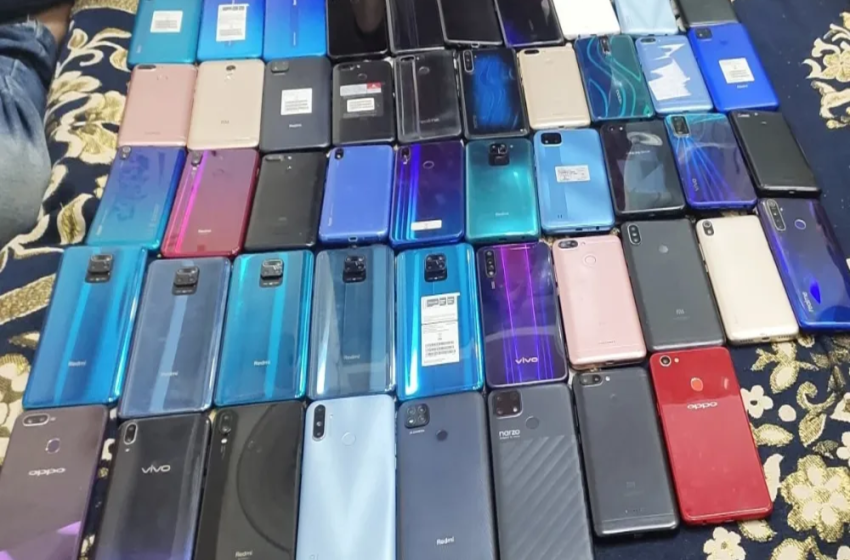
While there are no official statistics on the number of stolen phones, the flourishing black market for second-hand devices indicates that thefts occur frequently. Adding to this is the constant bustle at the Taliban’s Ministry of Interior’s Anti-Crime Directorate, where crowds of victims arrive daily to report stolen phones.
Mujtaba (name changed), one of many victims, shared his experience of being robbed at knifepoint in the Dehburi area of Kabul. “I was on my way to an English course when masked thieves stopped me. One held a knife to my throat while the other took my phone and wallet,” he recounted. He has since reported the incident to the Anti-Crime Directorate, hoping they can recover his stolen phone.
The situation is so dire that residents say no public space is immune to theft. Whether at supermarkets, shopping malls, taxi stands, or inside vehicles, thieves operate with impunity. Bilal Ahmad, another Kabul resident, fell victim to pickpockets while riding a taxi. “I only realized my phone was missing after getting out of the car,” he said, suspecting the two passengers sitting beside him.
Beyond the financial loss, victims are deeply worried about the potential misuse of personal data stored on their phones. Social media accounts, family photos, and private videos are at risk of being exploited by thieves.
Sardar Wali, who recently had his phone stolen, expressed his fears: “I’m worried the thieves might misuse my Facebook, WhatsApp, or email accounts, or even leak family photos and videos.”
Used mobile phone markets, such as those in Kabul’s Mirwais Maidan, play a significant role in the resale of stolen phones. While vendors claim to comply with government regulations, including registering the ID cards of sellers and buyers, the system appears to have loopholes.
A mobile phone vendor near Pul-e-Khashti Mosque explained that many second-hand phones sold in Kabul are imported from neighboring countries like Pakistan and Iran. “These phones, priced between $500 and $1,000, are in high demand and form a significant part of the trade,” he said.
The Telecommunications Regulatory Authority (ATRA) acknowledges that a large number of unregistered and undocumented mobile phones are in circulation. Jalal Shams, a spokesperson for the authority, stated that blocking all illegal phones could cause significant disruptions and financial losses for users. However, efforts are underway to curb the entry of such devices into Afghanistan.
The Taliban’s Ministry of Interior has mandated that all mobile phone sales be documented, with details submitted to the ministry. Despite this, residents and sellers remain skeptical, believing such measures might only slow down the smuggling of used phones rather than eliminate the issue entirely.
The escalating mobile phone thefts in Kabul reflect deeper socioeconomic challenges facing the city. Residents, already grappling with unemployment and financial hardship, are now left fearing for their personal safety and data security. Without effective measures to address the root causes and enforce stricter regulations, Kabul’s mobile theft crisis is unlikely to subside anytime soon.