Hidden Harassment Behind the Screen; Afghan Women Speak About Digital Violence
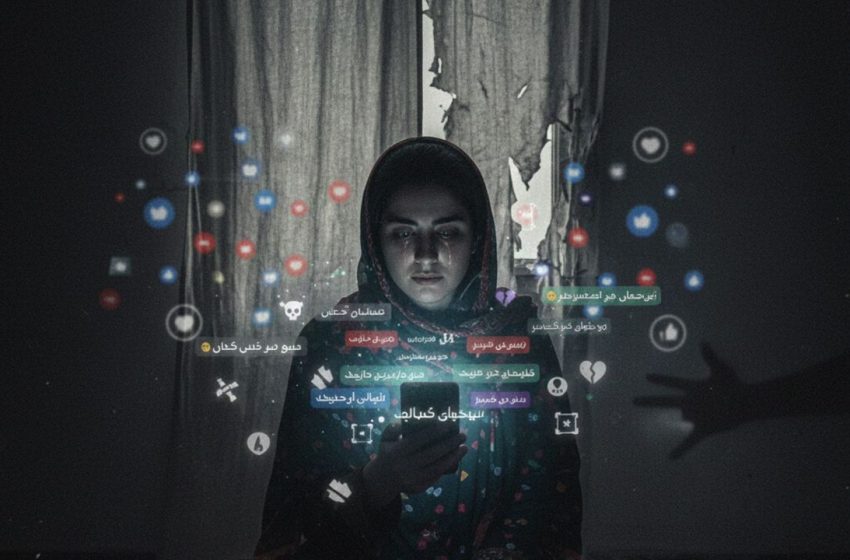
Tawazon – The International Day for the Elimination of Violence Against Women marked every year on November 25, aims to raise awareness and fight against all forms of violence women and girls face globally, from physical, psychological and sexual abuse to economic and digital violence.
According to the World Health Organization report, nearly one in three women worldwide has experienced physical or sexual violence at least once in her life. Violence is no longer limited to physical forms, digital or online abuse is a common growing forms of gender-based violence. Studies, including Every Woman Treaty, shows that up to 58% of women have faced some form of digital harassment.
Afghanistan is among the countries where women and girls face various forms of violence, physical, psychological, structural, cultural, and digital. Restrictions on education and employment, exclusion from social participation, unjust traditions and lack of legal protections have left Afghan women vulnerable. Local reports, such as from Shafaqna, indicate a 20% increase in violence cases against women over the past year. Afghan women not only facing physical or domestic abuse but are also being targeted online through threats, cyberbullying, digital discrimination, and harassment in virtual spaces.
Although cyber violence is sometimes seen as a “silent” from of abuse, it can have serious consequences like physical and psychological violence. It can push women away from online space, limit their social participation or professional engagement and create feeling of fear, isolation and insecurity.
November 25 not only marks the International Day for the Elimination of Violence Against Women, but also kicks off the global “16 Days of Activism Against Gender-Based Violence” campaign, which rans until December 10. It’s time for global solidarity to stand against violence towards women.
Online violence against women is not just a private issue, its widespread violation of human rights. When online violence is ignored, many women and girls are silenced and excluded from education, work, social participation and public life. This exclusion harms not only individuals but also social development and justice.
To better understand digital violence against women and girls in Afghanistan, Tawazon distributed a 20-question survey among women and girls in Kabul, Badakhshan and Takhar provinces. The survey aimed to assess various aspects of online abuse, including its forms, emotional effects, responses and awareness of rights.
All respondent reported experiencing at least one instance of online threats, insults, or harassment on social media or other digital platforms. Among them, 58% said they had received offensive or degrading messages, 16.7% stated that their photos or videos were shared without consent and 8.3% reported being stalked or monitored online.
Tawazon’s findings show that in 58.3%of cases, the harasser was anonymous, while 8.3% of women said the abuse came from acquaintance or close friends. Additionally, 41.7% reported that the experience had negatively impacted their mental health or social life, leading to anxiety or depression.A concerning 83.3% said the violence was never investigated or addressed and 41.7% were unaware of their legal rights against digital abuse, while 33.3% said they had no awareness at all.
Legal experts emphasize that harassment, unauthorized sharing of images and digital spying are considered crimes under the law. They said that during the previous government, efforts were made to draft a law to prevent and address cybercrimes, but it was not fully implemented. Currently, such cases are addressed based on interpretations of Sharia law.
Mudassir Momtaz, a legal expert says that while there is no specific law or clear legal provision for cybercrimes in Afghanistan, and the courts lack specialized knowledge on such cases, currently they are being addressed within the framework of Islamic Sharia and jurisprudence. “There’s no law with defined articles for each type of digital, banking, tax-related, or internet based crime,” Momtaz stated. “However, if someone is harmed, they can file a formal complaint with the judicial authorities. If the crime is proven, punishment is issued in line with the severity of the act, including possible financial or emotional compensation.”
Tahmina Mangal, a women’s rights activist, emphasizes that raising awareness among women is key to preventing and reducing online abuse. She adds that legal and psychological counseling and more importantly,the creation of clear and specific cybercrime laws are essential to protecting women and girls from digital violence.
Mangal says essential support for victims of cyber violence includes confidential legal advice, psychological counselling to reduce fear and anxiety and strong backing from families and communities. She highlights the importance of safe spaces, hotlines, specific cybercrime legislation and awareness campaigns in simple, accessible formats. “Education in schools and universities, radio and TV programs, digital safety training for families, and collaboration with civil society to produce educational content can all help raise public awareness,” she said.
Qarib Arian, a technology specialist, notes that journalists, civil society activists, and those with active online presence are the most vulnerable.He emphasizes using strong passwords and enabling two-factor authentication to prevent hacking and unauthorized access. “Adjusting privacy settings on Facebook, WhatsApp, and TikTok, installing antivirus software, avoiding auto-saving photos, locking apps, and not storing sensitive images on phones, these are all key steps to stay safe”, Arian added.
Meanwhile, the United Nations in Afghanistan reported on November 25, marking the International Day for the Elimination of Violence Against Women, that violence against women and girls has risen by 40% in the past two years. Currently, an estimated 14.3 million women in the country are in need of protection and assistance.
Georgette Gagnon, Acting Head of UNAMA and Deputy Special Representative of the UN Secretary-General in Afghanistan, has called on the Taliban to lift restrictions on women and girls. “For Afghan women, violence is not only what is seen or heard. Silencing their voices, closing the doors to their future, and stripping away their rights is also violence, we urge the Afghan authorities to end these restrictions,” she said.
This report reveals that digital violence against Afghan women and girls is not merely a technological threat, it is a continuation of deeply rooted gender inequalities and systemic violence that have long shaped their lives. What makes this form of violence more dangerous is its invisibility and th severe psychological and social toll it takes, pushing women out of online spaces, civic engagement, education, work, and public life, effectively erasing half of society.
Findings from the Tawazon survey, alongside expert insights, highlight a concerning reality; online violence is widespread in Afghanistan, yet awareness, legal protections and support systems remain limited. Women face threats, harassment, non-consensual image sharing, stalking and digital abuse, often with no legal recourse or protective structures in place.
Yet amid the darkness, signs of hope remain: efforts by civil society organizations, growing awareness, digital safety education, access to legal and psychological counseling and the voices of women who bravely stand up for their rights. These efforts remind us that the fight against digital violence cannot be achieved by legisltion alone, it requires the collective will of society, the media, civil institutions, families, and most importantly creation of a safe and equal space for women.
Online violence is not a personal issue; it’s a threat to women’s participation, community development, and the future of Afghanistan. Upholding women’s rights, ensuring digital safety, and investing in awareness and tangible support are not only moral imperatives, they are essential steps toward justice, progress and lasting peace.