UNAMA: Restrictions and Pressure on Afghan Women Intensified in Second Quarter of 2025
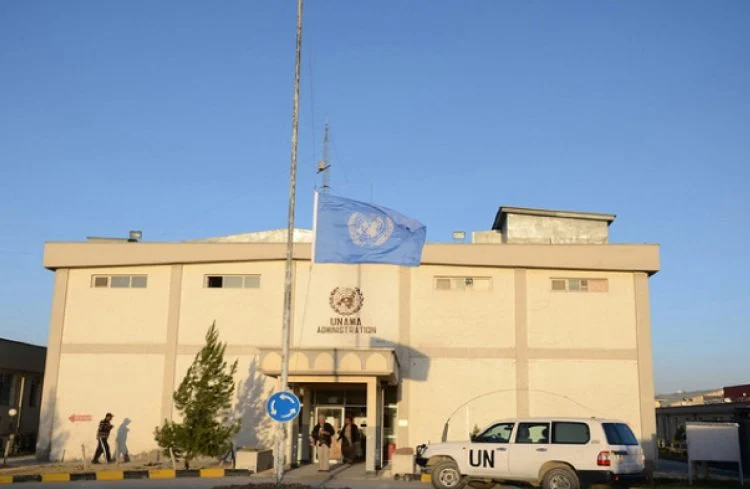
Tawazon – The United Nations Assistance Mission in Afghanistan (UNAMA) has reported that the women’s rights situation in Afghanistan worsened during the second quarter of 2025, with mounting restrictions, pressure, and widespread violations of fundamental freedoms.
In its latest report released on August 10, 2025, UNAMA warns that Taliban policies, from banning girls’ education to imposing strict limits on freedom of movement and the media, have had a profound impact on the lives of millions of Afghan women.
According to the report, women faced severe barriers in education, healthcare, employment, and mobility between April and June this year. Taliban have barred girls from continuing their studies beyond grade six, held the national university entrance exam without female candidates, and enforced rules requiring a male guardian (mahram) for travel and access to public services such as clinics, government offices, and public transport. Women without a full hijab or ‘burqa’ have been arrested, and their entry into public parks and recreational areas has been banned.
The Taliban’s Ministry for the Propagation of Virtue and the Prevention of Vice expanded its activities, leading to mass arrests of women in provinces such as Uruzgan, Tarinkot, and Kandahar. The ministry has imposed strict monitoring of markets, health clinics, shops, and government offices, ordering that services be denied to women without a male escort.
UNAMA stated that the Taliban continued carrying out executions in several provinces. In April alone at least three public executions were documented in Badghis, Farah, and Nimroz. These executions, conducted without independent oversight, took place in public venues, including sports stadiums, and corporal punishment was applied weekly. The Taliban’s Ministry of Foreign Affairs defended such actions as a “religious duty” and rejected any foreign criticism or intervention.
The country’s media landscape has grown even more restricted. Economic hardship and political repression have led to a shrinking media workforce, a ban on live broadcasting, and the introduction of stringent editorial guidelines for political content. Journalists and political commentators mus now obtain permits from the Ministry of Information and Culture, while the virtue ministry has expanded surveillance of social media.
The report has sparked deep concern among the international community. UNAMA has called on the Taliban to uphold their human rights obligations, particularly regarding women’s rights.
Since taking power in August 2021, the Taliban have imposed severe restrictions on women and girls, including keeping secondary schools closed to girls, requiring male guardians for travel,banning women from public spaces, and tightening control over the media. International human rights organizations say these policies not only violate fundamental rights but also severely limit women’s participation in society.