Stanekzai’s Defiant Revolt against Mullahs Absolute Monopoly
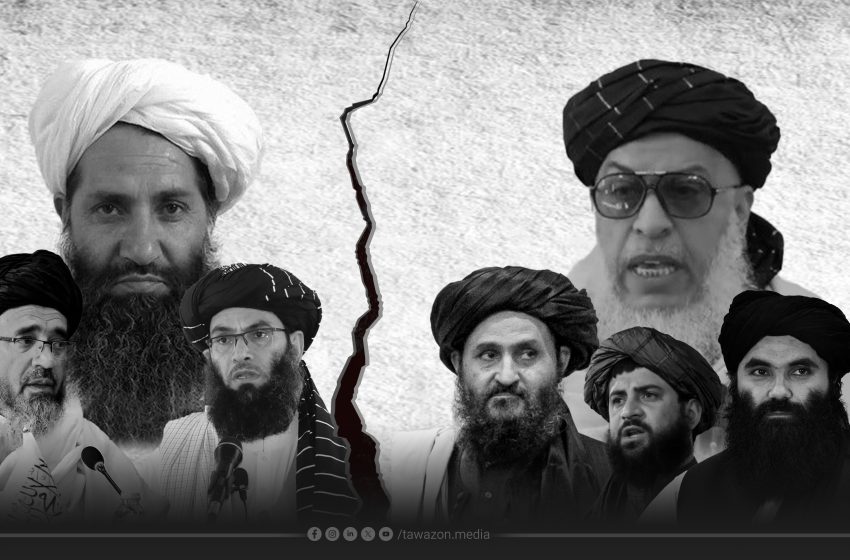
Disagreements and internal power struggles among Taliban leaders are not new; they have existed since the group’s founding under Mullah Omar’s leadership. These conflicts have even resulted in the deaths of several Taliban leaders. Mullah Mohammad Omar Mujahid, the founder of the Taliban Islamic Movement, belonged to the Ghilzai Hotak tribe, a fact that has always been difficult for the Durrani clan and its smaller branches, such as the Noorzai, Ishaqzai, and Popalzai, to accept. Evidence suggests that several senior Taliban military and political figures, including Mullah Borjan, Mullah Mishar, Mullah Mohammad Rabbani, and later Mullah Mansour, fell victim to these internal rivalries.
After Mullah Omar’s death—whether natural or an assassination—leadership of the group initially passed to Mullah Mansour, an Ishaqzai tribesman. However, following his death in a U.S. airstrike, power shifted to the Noorzai Kandaharis under Mullah Hibatullah’s leadership. Since then, Hibatullah and his inner circle of Sheikhs have consolidated power, tolerating no authority, ideology, or belief other than their own. They have sought to centralize control in Kandahar, where Hibatullah resides, and within the Quetta Shura. This has led to the marginalization of other Taliban factions, including the Peshawar Shura led by Mullah Abdul Ghani Baradar, the Doha Office, the faction loyal to Mullah Omar under Mullah Yaqoob, and the Miranshah Shura, also known as the Haqqani Network. Furthermore, even Taliban leaders from other Kandahari tribes have been pushed out of the power structure, solidifying Hibatullah’s dominance and exacerbating internal divisions within the group..
Initially, it appeared that Mullah Baradar would be appointed as the Taliban’s Prime Minister after their takeover, but Hibatullah Akhundzada and the Quetta Shura blocked this move. Instead, Baradar was sidelined from political power and assigned to economic projects. A native of Deh Rawood district in Uruzgan province, Baradar belongs to the Popalzai tribe. He was one of the four key figures who, under Mullah Omar’s leadership, founded the Taliban Islamic Movement and was widely seen as his successor.
On the other hand, due to necessity, Mullah Mohammad Omar’s son, Mullah Yaqoob, and the Haqqani Network’s leader, Sirajuddin Haqqani, were appointed as Defense and Interior Ministers, respectively. However, much of their ministries’ activities remain controlled from Kandahar, and Hibatullah has worked to keep these influential Taliban figures largely symbolic. This move, however, has not been entirely successful for the Sheikhs.
After the Taliban entered Kabul and formed their government in August 2021, rumors emerged that the Taliban leadership wanted to move the capital from Kabul to Kandahar to further consolidate power. However, sources within the Taliban indicate that this decision faced strong opposition, particularly from the Haqqani Network.
The key question is: What are the disagreements between Hibatullah and the Sheikhs, the Haqqani Network, and those Taliban leaders who played a central role in peace talks with the U.S.? Why, after more than three years, have these conflicts not only remained unresolved but deepened and widened? The Taliban’s internal disputes can be summarized in the following five points, though they are not limited to these:
The monopoly of power by Hibatullah and the Sheikhs (Quetta Shura), the nature of interactions and relations with the world, particularly the West, the presence of militant groups in Afghanistan, including Al-Qaeda, Tehrik-i-Taliban Pakistan (TTP), and the East Turkistan Islamic Movement, and the Taliban’s ties with them, discriminatory practices in the distribution of governmental power, resources, and equipment, and the role of women in government and non-governmental organizations, including their right to education.
As mentioned earlier, these are only some of the major disputes among Taliban leaders. Other issues include the formation of a broad-based government, the participation of women and minorities in governance, the drafting of a constitution and national assembly, and defining and protecting national values.
The central and most significant conflict among Taliban leaders stems from the power monopoly exercised by Hibatullah and the Sheikhs. To consolidate control in Kandahar, crucial powers and responsibilities were stripped from key ministries such as Defense and Interior, as well as the Intelligence Directorate, led by Mullah Yaqoob, Sirajuddin Haqqani, and Abdul Haq Wasiq. These ministries lost their authority over senior appointments and dismissals, weapons distribution, and the use of heavy weaponry, with all such powers being transferred to Kandahar. To further tighten his grip over the Defense and Interior Ministries, Hibatullah appointed Ibrahim Sadr as Deputy Security Minister, Mullah Fazil Mazloom as First Deputy Minister of Defense, and Mullah Qayyum Zakir as Second Deputy Minister of Defense, significantly curtailing the influence of Siraj Haqqani and Yaqoob Mujahid.
The conflict between the Kandahari Sheikhs and the Haqqani Network escalated to the extent of potential physical elimination of key figures. Reports suggest that Daud Muzammil, a former governor of Balkh close to Hibatullah, and Khalil-ur-Rahman Haqqani, the Taliban’s acting Minister for Refugees and brother of Jalaluddin Haqqani, were victims of these internal disputes. While ISIS claimed responsibility for their assassinations, the broader context of Taliban infighting suggests that these killings were part of an ongoing power struggle.
In a recent development, the Kandahari Sheikhs further weakened the Haqqani Network by demoting Mawlawi Abdul Kabir, a close associate of the Haqqanis, from Deputy Prime Minister to a lower ministerial rank. Additionally, the Haqqanis had expected Khalil-ur-Rahman Haqqani’s son to inherit his father’s position after his assassination, but Hibatullah made a decision that the Haqqanis found unacceptable. Eventually, after a week of internal deliberations, Abdul Kabir reluctantly accepted Hibatullah’s order.
In Taliban governance, military power dictates authority—those who control force determine positions and resources. Sher Mohammad Abbas Stanikzai, despite being a prominent spokesperson, lacked military influence, which weakened his standing within the leadership. His disagreements with the Kandahari Sheikhs became evident as he increasingly used public speeches to criticize Hibatullah’s decisions on girls’ education, women’s employment, and governance. His outspoken stance ultimately led to his removal from the political office and his eventual exile to the UAE.
Stanikzai, in his final statements before fleeing, warned of Afghanistan’s economic collapse and the potential political downfall of the Taliban. In an audio message recorded in the UAE, he described Hibatullah’s rule as fragile, emphasizing that no regime is permanent and recalling that he had witnessed the fall of 13 different governments in his lifetime. He also urged Taliban members not to blindly follow Hibatullah, stressing that obedience should be limited to decisions that align with Islamic principles.
Given the Taliban’s internal fractures, Afghanistan’s increasing international isolation, rising poverty and unemployment, the appointment of unqualified individuals to key positions, the extremist stance against women and girls, and the growing presence of anti-Taliban resistance groups, the eventual collapse of the Taliban’s rule seems increasingly plausible. If these internal disputes and external pressures continue to escalate, their regime may soon face serious challenges or even complete downfall—an outcome that Afghanistan’s history has repeatedly witnessed.