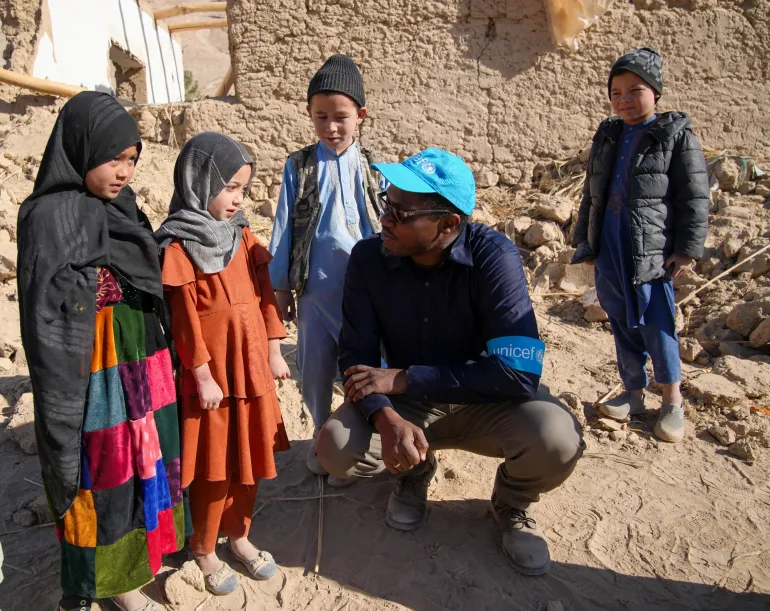
UN Report: Afghanistan’s Humanitarian Crisis Worsens as Millions Struggle for Aid

Kabul: A new UN report has highlighted the deepening humanitarian crisis in Afghanistan, where 23.7 million people, including 12.3 million children, required urgent assistance in 2024. The country continues to face the consequences of prolonged conflict, economic challenges, and natural disasters, worsening the situation for millions of vulnerable Afghans.
Access to healthcare remained a significant challenge, especially in remote regions. UNICEF-supported health facilities provided essential services to over 20 million Afghans, while mobile health teams reached an additional one million in hard-to-reach areas. Malnutrition remained a major concern, with 715,000 children suffering from severe acute malnutrition receiving treatment. In an effort to prevent disease outbreaks, nearly 704,000 children were vaccinated against measles.
The report highlights the deteriorating water and sanitation infrastructure in Afghanistan, increasing the risk of disease outbreaks. In response, UNICEF provided safe drinking water to 442,000 people and sanitation services to 269,000 individuals. Additionally, hygiene awareness campaigns reached 528,000 people, aiming to prevent the spread of waterborne diseases.
Despite ongoing restrictions on girls’ education, UNICEF-supported learning programs helped 686,000 children, with 60% being girls, through 21,355 community-based education classes. Meanwhile, child protection services assisted 2.8 million children and caregivers, providing psychosocial support to those affected by displacement, violence, and family separations.
Afghanistan faced multiple natural disasters in 2024, with heavy rains and flash floods in May devastating Badakhshan, Baghlan, and Takhar provinces. These floods resulted in 180 deaths and 280 injuries, displacing thousands of people. Additionally, Afghanistan saw a massive influx of returnees, with over 758,000 Afghans deported from Pakistan since September 2023, further straining the country’s already overburdened humanitarian response system.
As winter intensifies, food insecurity remains one of the most pressing concerns. According to the UN report, 14.8 million people (32% of the population) are projected to face crisis-level food shortages in the coming months. Humanitarian organizations continue to call for urgent global support to sustain life-saving interventions and prevent further deterioration of Afghanistan’s humanitarian situation.
While relief efforts have helped alleviate some suffering, the scale of the crisis demands continued international engagement to ensure millions of vulnerable Afghans receive the necessary aid.