Washington, Beijing, and Moscow at Odds Over Bagram: Can the Taliban Hold Its Ground?
Tawazon: Taliban Defense Minister Mullah Yaqoob Mujahid is reportedly set to travel to China soon as part of a high-level delegation. The visit is expected to focus on Afghanistan’s current situation, regional cooperation, and potential acquisition of advanced military equipment, including fighter jets, missiles, and tanks.
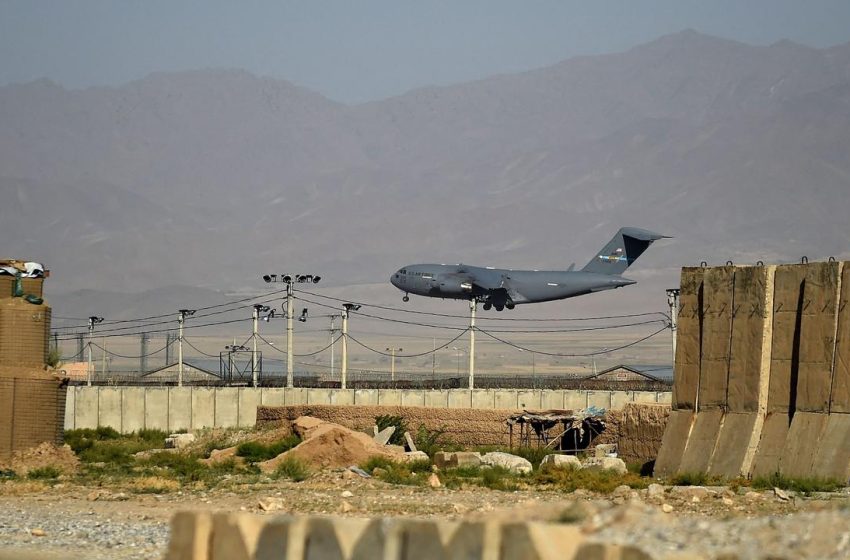
Meanwhile, some U.S. sources suggest that Washington is considering plans to retake the Bagram military base—a point repeatedly raised by former President Donald Trump. Additionally, a Russian state media report claimed that China invited the Taliban defense minister to discuss potential U.S. actions and explore avenues for defensive cooperation.
Afghan citizens are concerned about these developments. Many fear Afghanistan could once again become a stage for global power struggles. After decades of conflict, ordinary Afghans are longing for peace and economic stability.
Analysis:
Afghanistan has been caught in foreign crossfires for over 40 years—from the Soviet invasion and civil wars to U.S.-NATO intervention and now emerging regional rivalries. Afghan civilians have consistently borne the heaviest toll.
The Taliban’s visit to China for weapons discussions has dual implications:
• The Taliban aim to secure international recognition and military support to strengthen their government.
• Reports of a possible U.S. return and China’s involvement raise fears that Afghanistan could become a new front in U.S.–China competition.
The U.S.–China–Taliban Triangle
Afghanistan presents both opportunity and challenge for all three sides. While the Taliban control the government, the U.S. and China are vying for influence and strategic positioning.
U.S. Perspective:
• Bagram Base: Beyond a military outpost, Bagram symbolizes strategic presence. Retaking it could allow Washington to exert direct pressure on Central Asia, China, and Iran.
• Political Influence: Washington seeks to pressure the Taliban on human rights and women’s education, potentially creating leverage or alternative governance options.
• Counterterrorism: The U.S. fears Afghanistan could again become a safe haven for groups like Al-Qaeda or ISIS.
China’s Calculus:
• Security: China is concerned about Xinjiang and does not want Uyghur militants operating from Afghan territory.
• Economic Interests: Afghanistan’s lithium, copper, and other natural resources are valuable for China’s technology and electronics sectors.
• Political Strategy: China seeks to align with the Taliban to create a buffer against potential U.S. influence.
Taliban Position:
• They aim to present themselves as a legitimate government and gain international support.
• They rely on China and Russia to strengthen their position against U.S. pressure.
• Over-reliance on China could provoke U.S. opposition or intervention.
Potential Conflict Scenario: If the U.S. moves to retake Bagram:
• China may increase its support for the Taliban, even without formal recognition.
• The Taliban would try to bolster themselves with Chinese and Russian backing while facing U.S. pressure.
• Afghanistan risks becoming the frontline of a global power struggle once again.
Assessment:
This triangular dynamic poses significant risks for ordinary Afghans. While the Taliban focus on retaining power, the U.S. pursues strategic influence, and China seeks economic and security advantages. In the midst of this, Afghan aspirations for peace, education, and employment face serious threats.
Path Forward:
Taliban Responsibilities:
• Prioritize citizens’ rights, particularly education, employment, and women’s freedoms.
• Pursue balanced diplomacy, avoiding over-dependence on China or fear of the U.S.
• Build an inclusive government representing all ethnic groups to prevent internal conflict.
International Responsibilities:
• Avoid using Afghanistan as a battlefield for strategic rivalry.
• Invest in infrastructure, fair resource management, and citizen welfare.
• Support political dialogue among Afghans rather than focusing solely on national interests.
Role of Afghan Citizens:
• Emphasize national unity over ethnic, linguistic, or sectarian divisions.
• Apply collective pressure to ensure practical steps for peace, education, and employment.
Conclusion:
Afghanistan can escape the cycle of foreign power struggles only by adopting a neutral, balanced policy—similar to Switzerland. A broad-based, inclusive Taliban government that respects citizens’ rights and maintains balanced international relations could transform Afghanistan from a battlefield into a regional bridge. Otherwise, history risks repeating itself, and Afghans may remain pawns in the strategic games of others.