Natural Disaster or Catastrophe; Why Do Earthquakes in Afghanistan Turn into Human Tragedies?
Tawazon – Earthquakes are one of the Earths most fundamental and dynamic phenomena, emerging from deep within its crust. They occur when accumulated energy in the Earths subsurface layers is suddenly released, shaking the ground above. This energy is typically discharged along fractures and faults under pressure, sending seismic waves through surrounding areas. The intensity of earthquakes ranges from barely perceptible tremors to devastating shocks. They are not only caused by tectonic movements but also by volcanic activity, underground collapses, or even human-made explosions.
From a scientific perspective, earthquakes are part of the Earths natural dynamism, evidence that our planet is alive. Yet, when they strike vulnerable human communities, they unleash humanitarian crises. In countries lke Afghanistan, where infrastructure is fragile and populations are scattered across high risk mountainous regions, earthquakes often result in heavy casualties, widespread homelessness, and social collapse.
This report examines earthquakes as a natural phenomenon and analyze their human, social, and structural consequences in Afghanistan, exploring why they often lead to humanitarian disasters. The analysis highlights tectonic factors, weak construction, poverty, lack of warning systems, and poor governance, while reviewing historic quakes that demonstrate the countrys vulnerability. It also proposes practical strategies to reduce risks and strengthen resilience in response to natural disasters.
Afghanistans Geology
Geologically, Afghanistan is one of the most active and complex seismic regions in the world. The country lies at the heart of the AlpineHimalayan seismic belt, stretching from southern Europe to South Asia, created by the powerful collision between the Indian and Eurasian tectonic plates. This ongoing collision builds immense pressure in Afghanistans crust, causing active faults and high seismicity across the country.
Afghanistans geology consists of diverse sedimentary, igneous, and metamorphic rocks spanning eras from the Paleozoic to the Quaternary, reflecting both its long geological history and its seismic volatility. Faults such as the Hindu Kush, Chaman, Kunar, and Nuristan are among the most dangerous, regularly releasing stored energy through shallow, destructive quakes. Studies conducted by French, Russian, and German geologists in past decades have mapped Afghanistans subsurface structures, highlighting its geodynamic importance and explaining why earthquakes here often lead to devastating human consequences.
A History of Quakes in Afghanistan
Modern Afghanistan has endured repeated destructive earthquakes, claiming thousands of lives and overwhelming its fragile infrastructure. These quakes usually strike mountainous seismic hotspots such as the Hindu Kush, Paktika, Herat, and Kunar. Because they are shallow and intense, they leave behind severe human and economic losses.
In 1998, a 6.6-magnitude quake in claims lives of over 4,000 people and destroyed countless homes. In 2002, two successive earthquakes in the Hindu Kush, measuring 6.1 and 7.4, killed over 1,100 people and devastated northern Afghanistan. In 2015, a 7.5 quake again in the Hindu Kush killed 399 people in Afghanistan an Pakistan. In 2022, Paktika was struck by a 6.1 quake that killed more than 1,000 and injured thousands more. In 2023, a series of 6.3 quakes in Herat killed over 2,000 people and wiped out 382 villages, making it one of the deadliest recent disasters. The latest quake in 2025, a 6.0 magnitude shock in Kunar and Nangarhar, killed more than 800 and injured 2,500, based on preliminary data. Entire villages in Nurgal, Suki, Watepur, Manugi, and Chapa Dara were flattened. Poor weather and limited aid made the crisis worse.
Why Do Earthquakes Become Human Catastrophes in Afghanistan?
Earthquakes in Afghanistan become humanitarian disasters due to a deadly mix of natural, structural, social, and governance factors. Its location atop the Hindu Kush collision zone results in frequent, shallow, and powerful tremors. But it is not the seismic activity alone, it is the extreme vulnerability of Afghan society that amplifies the tragedy.
Millions of Afghans live in houses built with earthquake mud and unreinforced materials that crumble under the slightest tremor. Poverty, lack of investment in resistant construction, and the isolation of communities in remote mountains all make rescue operations painfully slow. There is no early-warning system in place, rescue equipment is limited, and coordination between domestic and international actors is weak, all worsen the impact of each quake. In Afghanistan, earthquakes shake not only the ground, but also the very foundations of life and hope.
The Depth of Disaster
After the recent Kunar earthquake, Taliban officials announced relief operations, dispatching emergency teams and allocating AFN 100 million for rescue efforts. The Ministry of Defense reported airlifts of aid, while spokesperson Zabihullah Mujahid highlighted government efforts on social media. Yet, the Talibans operational capacity to manage natural disasters is highly limited. First, Afghanistans infrastructure is severely outdated and dysfunctional. Many roads to remote villages collapsed, leaving entire communities cut off. In some places, such as the Mazar Valley in Nurgul district, rescuers have been unable to reach communities where large number of people remain trapped under the rubble.
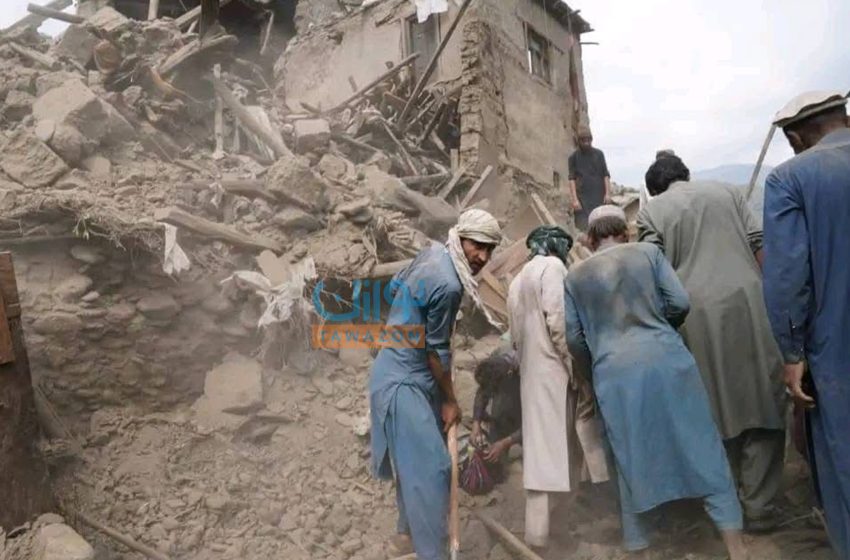
Second, the Taliban lack advanced and specialized equipment for rescue operations. With no heavy machinery, rescuers dug through rubble with bare hands and rudimentary tools to pull victims from the beneath th debris. This has slowed operations dramatically and increased the likelihood of deaths among those still buried. Third, the Taliban political and social restrictions have become major obstacles to relief efforts. Taliban bans on female staff and former government workers crippled humanitarian teams, especially in treating injured women. Many women went untreated or died in route to distant hospitals. Fourth, neither past governments nor the Taliban have built an early-warning system, leaves communities entirely unprepared for earthquake. Fifth, barring women from work and education has stripped Afghanistan of half its skilled workforce, weakening crisis response capacity. Its not only a flagrant violation of human rights, but also severely undermines the countrys capacity to respond to natural disasters. In a country grappling with deadly earthquakes, excluding half of the population from contributing to essential services has devastating consequences for the crisis management and recovery.
In Kunar, at least six pregnant women reportedly died because no midwives or female doctors were available. Women injured in the quake were sent to Nangarhar, but some died before arrival.
The Talibans global isolation also slowed aid delivery. International organizations hesitated to engage directly, citing security risks, Taliban restrictions, and lack of guarantees for staff safety. Meanwhile, Afghans were left to rescue one another with shovels, sticks, and bare hands, women and men alike digging through rubble and erecting makeshift tents with tarpaulins and cloth.
Social and Psychological Impacts
Beyond physical destruction, earthquakes inflict deep psychological and social consequences. Survivors often suffer long-term trauma – insomnia, anxiety, nightmares, and symptoms of post-traumatic stress disorder. Families torn apart by death or displacement experience grief, despair,and isolation. Communities also fracture. Forced displacement and mass homelessness erode local networks, increasing depression and social breakdown. Poverty deepens as families lose homes and livelihoods, especially in rural areas.
The absence of mental health services leaves survivors without support, raising the risk of chronic psychological crises. Thus, earthquakes in Afghanistan not only shatter buildings, but also unravel the mental and social fabric of society.
Pathways Forward
To prevent future disasters, Afghanistan urgently needs: Earthquake-resistant construction using local materials, enforced building codes, training for local engineers, seismic monitoring and early-warning networks, quick-response rescue teams, hazard mapping، evacuation routes.
Crucially, women must be allowed back into education and employment. Excluding half the population strips the country of vital skills needed in emergencies, endangering thousands of lives.
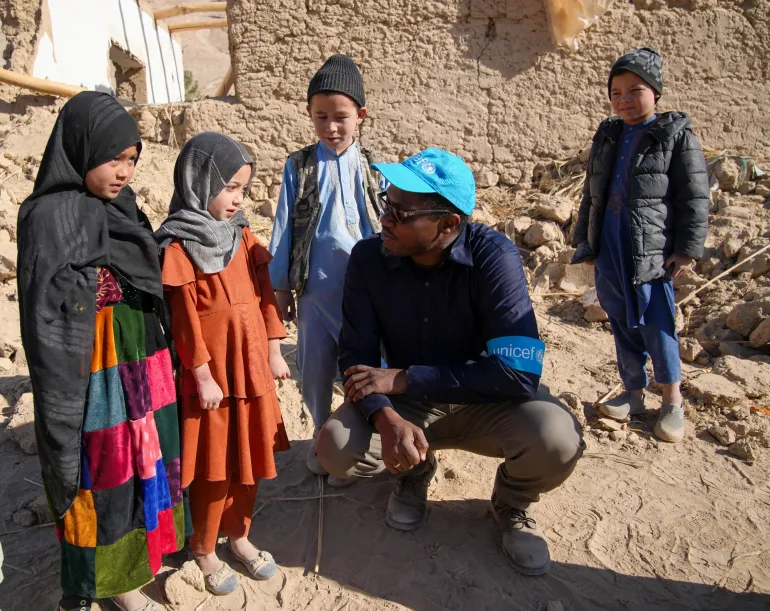
Internationally, aid must be depoliticized. The global community should channel assistance through neutral organizations like the Red Cross, UNICEF, and OCHA, focusing on peoples needs rather than Taliban politics. Safe aid corridors, transparent distribution, and guaranteed security for humanitarian teams are essential.
Public education is also key. Teaching safe earthquake practices, evacuation methods, and first aid in schools, mosques, and media can empower communities. Local volunteer networks can reinforce preparedness and resilience.
Conclusion
Earthquakes in Afghanistan are natural phenomena, but their human toll reflects deep structural, social, economic, and political vulnerabilities. The ground will always shake along the AlpineHimalayan belt, but whether tremors become disasters depends on human preparedness, prevention and response.
Afghanistans weak housing, lack of resilient infrastructure, poverty, scattered settlements, traditional houses, lack of warning systems, and ineffective crisis management, causes people to become victims not only of the earthquake itself, but also of neglect and inefficiency. From Takhar to Paktika, Hindu Kush to Herat, and Kunar to Badakhshan, the story repeats: thousands dead, millions displaced, hope shattered.
While Afghans endure under the Talibans limited capacity, global silence and slow aid delivery make the tragedy worse. Afghans are victims of politics, not its architects. If the world disputes the Taliban, it should not punish ordinary Afghans for it. Humanity must prevail over politics.
Earthquakes cannot be stopped, but human catastrophes can be prevented. That responsibility lies with us all: policymakers, aid agencies, enginers, teachers, journalists, and communities alike. A safer future for Afghanistan is possible, but only through awareness, action, and solidarity.