UN Extends UNAMA Mandate, Taliban Call for Neutrality, Urge Focus on Engagement
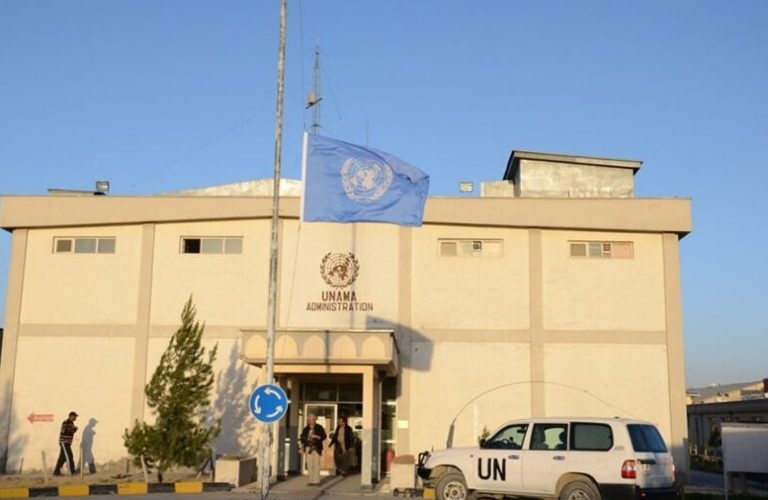
The United Nations Security Council recently voted to extend the mandate of the United Nations Assistance Mission in Afghanistan (UNAMA) for another year. While the Taliban previously criticized UNAMA’s role as ineffective, this time their response has been more measured, though accompanied by specific expectations.
In a statement, Taliban spokesperson Zabihullah Mujahid urged UNAMA to focus on fostering stronger relations between Afghanistan and the international community. He emphasized that the mission should prioritize supporting Afghanistan’s security, economic, and social development, advocating for the removal of sanctions, unfreezing Afghan assets, and ensuring Afghanistan’s rightful seat at the UN is returned to Afghans.
Mujahid also criticized UNAMA, accusing it of spreading negative narratives and facilitating biased propaganda in past. He warned that the mission should avoid becoming, in his words, “a tool in the hands of malicious groups” and should instead provide a balanced and accurate reflection of Afghanistan’s progress.
Meanwhile, Pakistan’s representative to the UN, Munir Akram, supported the mandate extension but voiced serious concerns. He accused the Taliban of harboring anti-Pakistan militant groups and failing to take decisive action against ISIS. Akram claimed that groups like Tehrik-i-Taliban Pakistan (TTP) and Baloch separatists are using Afghan territory to launch attacks inside Pakistan.
The Taliban swiftly rejected these allegations, asserting that no foreign militant groups are present within Afghanistan. They described Pakistan’s concerns as internal issues unrelated to Afghan soil. Mujahid also pointed to recent developments, such as the arrest of an ISIS member in Pakistan, arguing that the terrorism issue lies beyond Afghanistan’s borders.
As the UNAMA mandate moves forward, the Taliban continue to press for international recognition, sanctions relief, and constructive engagement, while regional tensions and accusations persist.